Eczema on Face: Rash Clues, Gentle Care and When to Seek Help
What does eczema on face mean?
Eczema on face can mean dry, itchy, inflamed skin caused by atopic dermatitis, contact dermatitis or seborrheic dermatitis. These conditions need different management. A facial rash is not enough to identify the cause, and redness alone does not prove eczema.
This guide helps you organise the questions to ask: what the rash might be, which daily products deserve review, and which changes need prompt care. It does not diagnose your skin from a picture.
Sources: NEA. Checked October 10, 2026.
Similar-looking facial rashes need different answers
Atopic dermatitis often feels very dry, scaly and itchy. Seborrheic dermatitis may produce oily-looking as well as dry, scaly patches. Contact dermatitis follows irritation or an allergic reaction to something contacting skin. Rosacea, psoriasis and medication reactions are other explanations for facial redness.
These are clues to discuss with a clinician, not a checklist that selects your diagnosis. A rash around the mouth is not automatically eczema. Tell the clinician which medicines and creams you have used and for how long, including nonprescription products.
Sources: American Academy of Dermatology. Checked October 10, 2026.
Look beyond the product applied directly to the rash
Contact dermatitis can cause itch, burning, stinging, swelling, cracking or blisters. The source may not be a face cream: shampoo briefly touching an eyelid during rinsing can matter. Allergens on fingers, including ingredients in nail products, can reach the skin around the eyes.
A reaction can appear hours or days after contact. A product used for years can still become relevant, because its ingredients may change or a new allergy may develop. A timeline of products and symptoms can be useful; it does not prove which ingredient caused the rash.
Sources: American Academy of Dermatology · American Academy of Dermatology. Checked October 10, 2026.
A simpler washing and moisturising routine
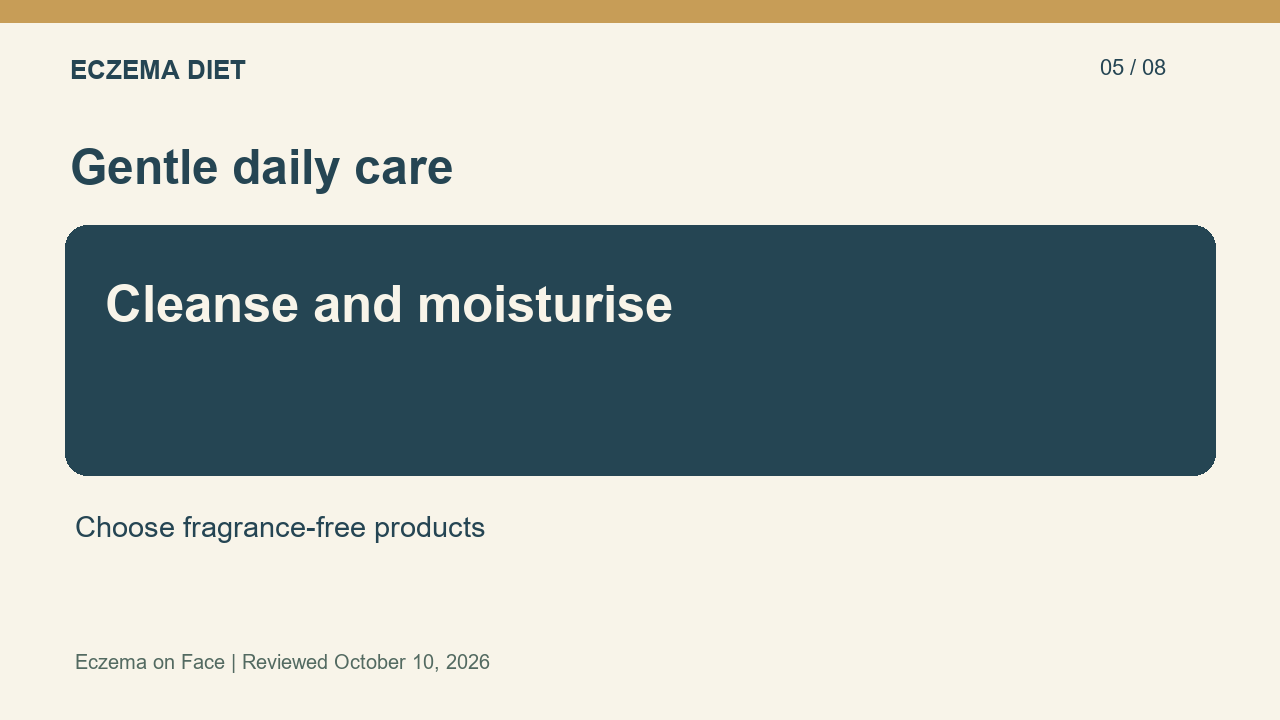
Choose gentle, fragrance-free cleansing products. After washing, apply a fragrance-free moisturiser while skin is still damp. The American Academy of Dermatology advises reapplying when skin feels dry and avoiding scratching. Ask for advice if a product causes discomfort rather than repeatedly applying it to irritated skin.
Cleveland Clinic recommends creams or ointments rather than relying on lighter lotions for eczema-prone skin. It also cautions that exfoliating facial acids, anti-ageing products and acne treatments can irritate facial eczema. Bring your full routine to a dermatologist if you are treating acne and eczema together.
Sources: American Academy of Dermatology · Cleveland Clinic. Checked October 10, 2026.
What should a facial treatment plan clarify?
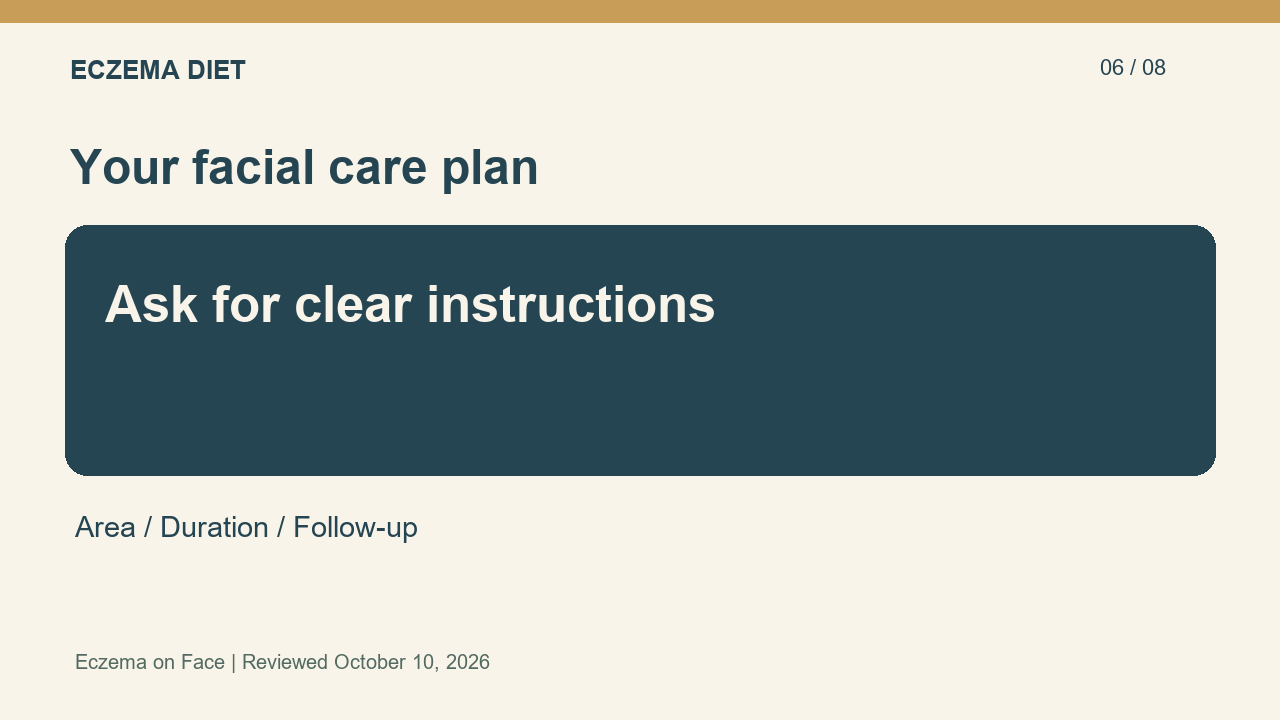
The diagnosis, affected location and severity guide treatment. Ask which product belongs on which area, how long to use it, and what should trigger a review. Do not assume instructions for a body rash apply to the face or eyelids.
NEA describes different treatment categories for facial eczema, including anti-inflammatory medicines and treatments used for seborrheic dermatitis. This page does not select a medicine, strength or dosing schedule. A persistent or uncertain rash needs assessment rather than a series of guessed treatments.
Sources: NEA. Checked October 10, 2026.
When is it more than a routine flare?
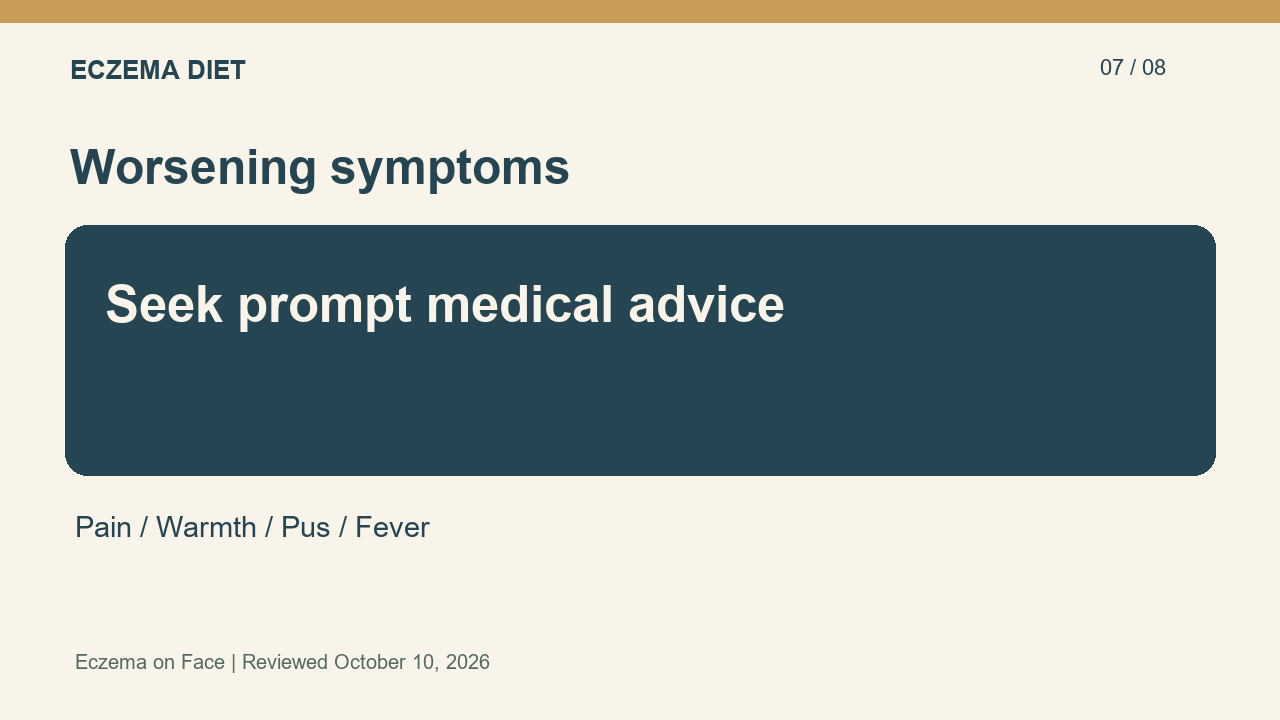
Seek urgent medical advice if eczema becomes painful, swollen or warm, suddenly worsens or spreads, develops pus or leaking fluid, or is accompanied by fever or feeling unwell. The NHS lists these as possible infection or eczema herpeticum warning signs.
A painful blistering facial rash also needs medical assessment. The AAD warns that shingles on the face can affect eyesight. Do not assume a new painful facial rash is simply your usual eczema.
Sources: NHS · American Academy of Dermatology. Checked October 10, 2026.
Does facial eczema mean I need a special diet?
The location of a rash does not establish a food trigger. The NHS advises against changing your diet for atopic eczema without a doctor’s advice, including when breastfeeding a baby with eczema. Do not begin a broad elimination diet based only on a facial flare.
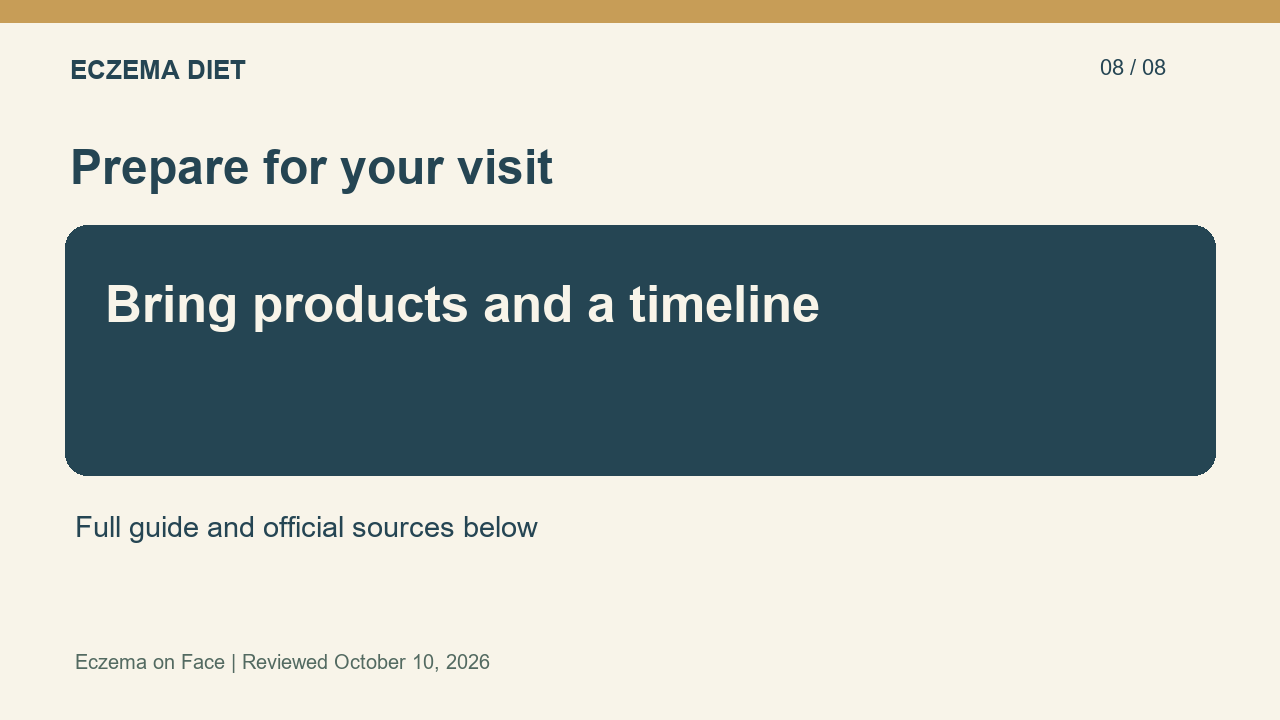
For the appointment, note where the rash appears, when it began, products and medicines used, and whether pain, discharge or fever has developed. Keep skin-care changes and food questions separate so the discussion does not confuse a possible contact exposure with a proven food allergy.
Sources: NHS. Checked October 10, 2026.
Questions to take to your appointment
Could this be contact dermatitis, seborrheic dermatitis or another facial condition? Would allergy patch testing help? Which part of my skin-care routine should change? What are the instructions for my face specifically, and when should I come back?
Facial eczema is not one uniform condition. A useful plan combines the right diagnosis, a tolerable care routine and clear instructions for worsening symptoms.
Sources: NEA. Checked October 10, 2026.
Related: Facial flare-ups and cosmetic exposure clues · Baby eczema care
Reviewed October 10, 2026. Educational information, not an individual diagnosis or prescription.
Visual summary